

Mycetophyllia aliciae
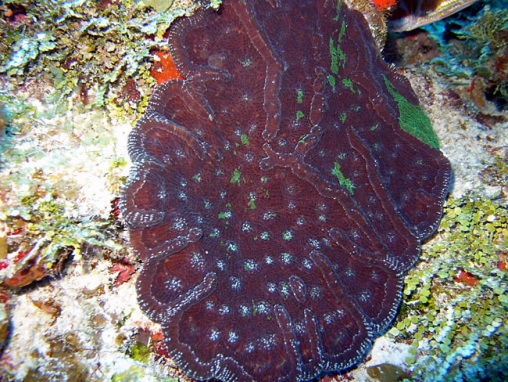
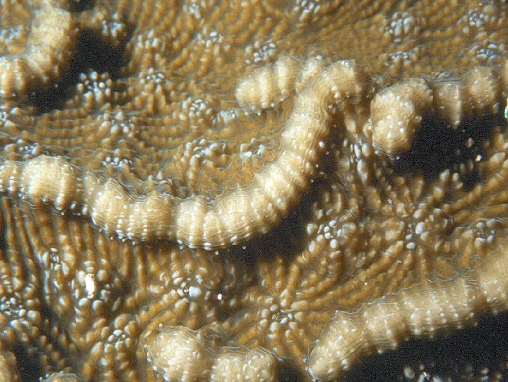
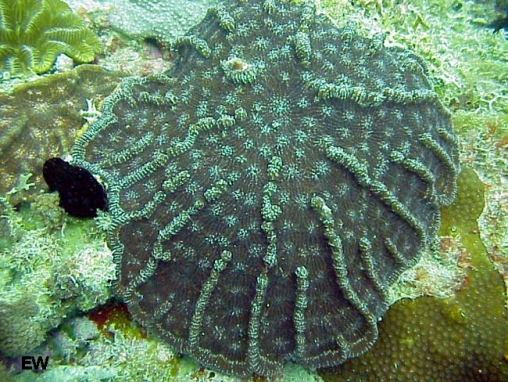
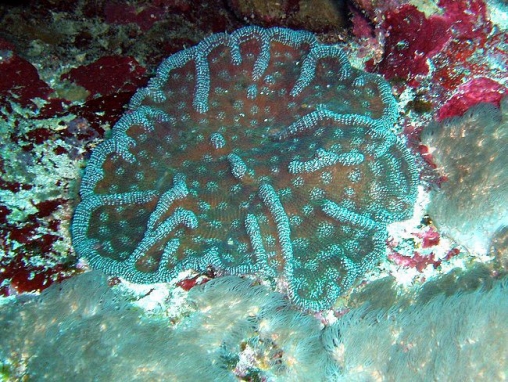
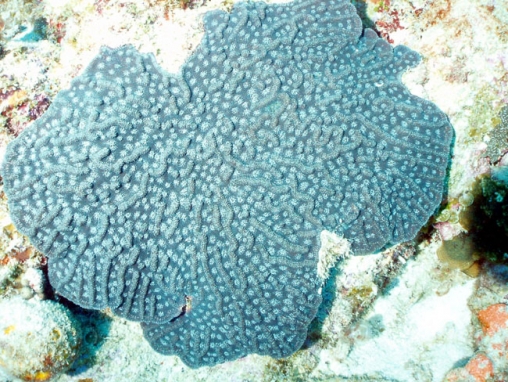
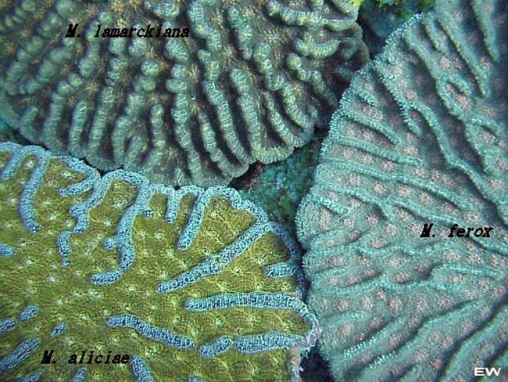
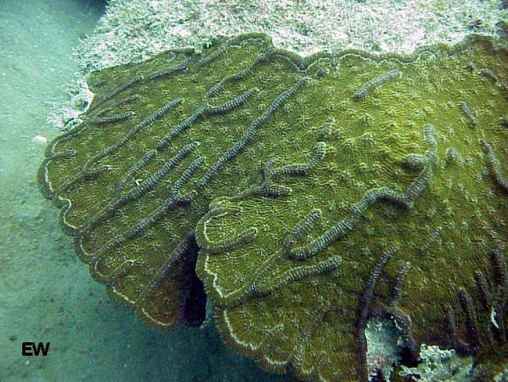
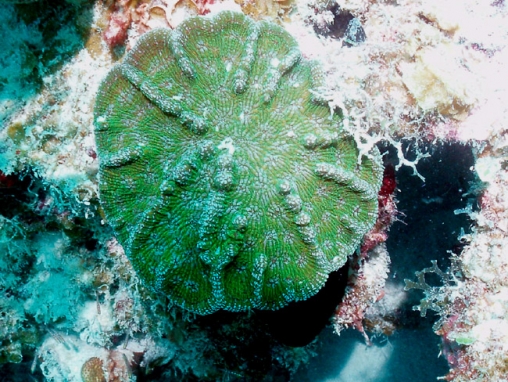
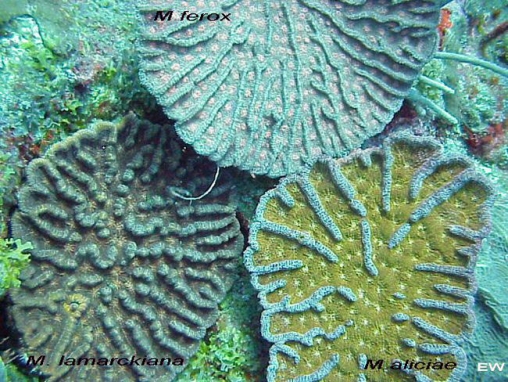
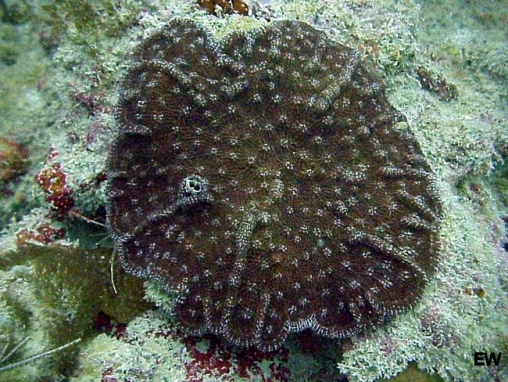
Colonies are usually relatively thin plates, sometimes domed. They are meandroid, but in many colonies, their central parts have no clear valleys and ridges, but intsead individual corallites protrude a little. This especially occurs in deeper water. In others, the central parts loose all ridge formation, or there may be several polyps between ridges.
Raised parts (whether ridges or individual corallites) are commonly lighter in colour than the surrounding area. They may be dark brown or green and may have light green or white spots around the mouths and along the ridges.
Maximum colony diameter is at least 1 metre.
Raised parts (whether ridges or individual corallites) are commonly lighter in colour than the surrounding area. They may be dark brown or green and may have light green or white spots around the mouths and along the ridges.
Maximum colony diameter is at least 1 metre.