

Montastraea faveolata
The three species here named Montastrea annularis, franksi and faveolata are now commonly assigned to the genus Orbicella.
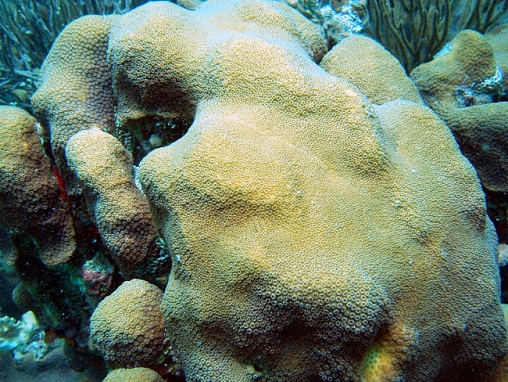
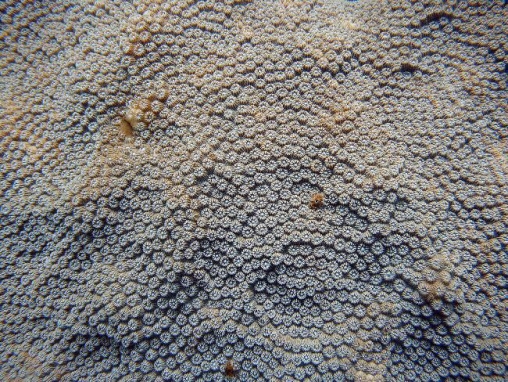
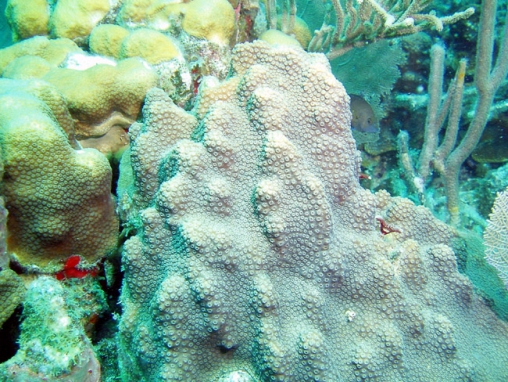
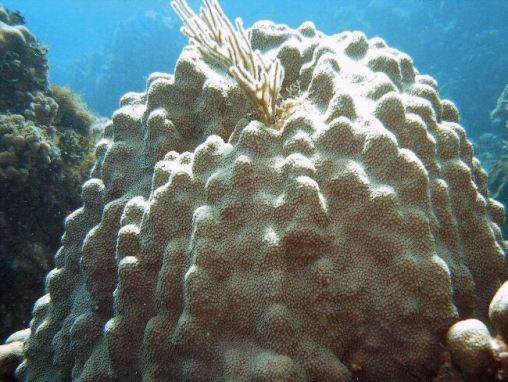
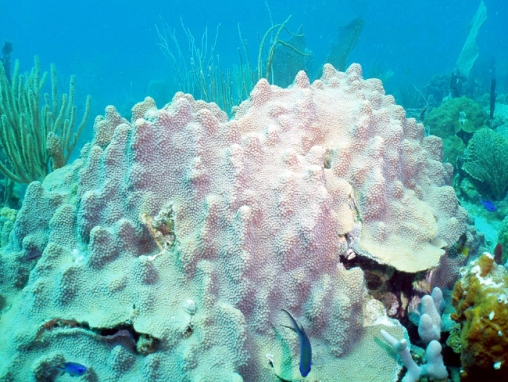
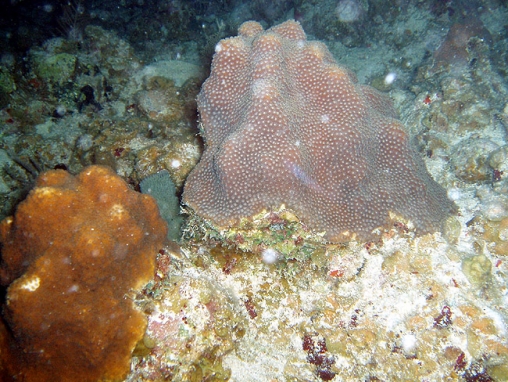
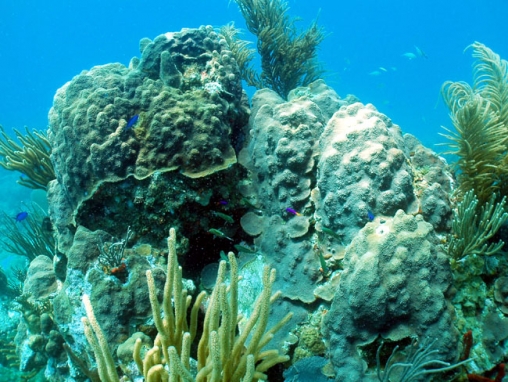
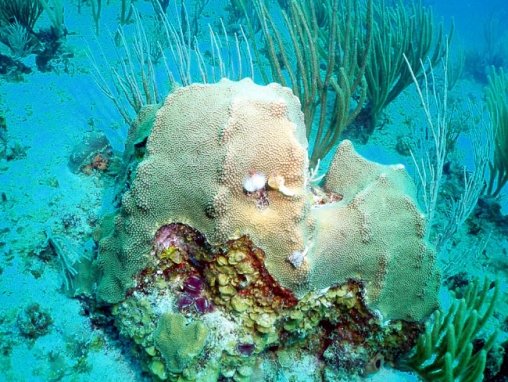
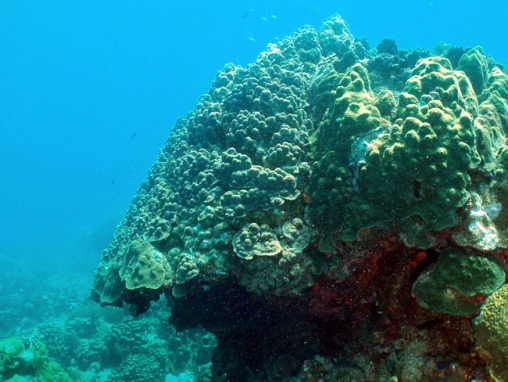
Colonies are massive and large, and surfaces usually support small, upward mounds and projections. Calices cover entire surface. Calices are small (about 5 mm diameter) with very regular spacing. Colour is usually pale brown but may be bright, fluorescent green over the dark brown.
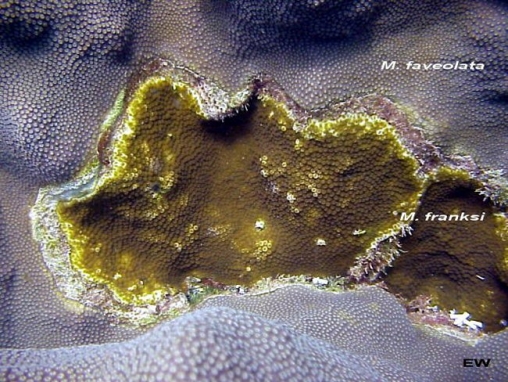
Distinguishing features of the 3 Montastraea species with small calices:
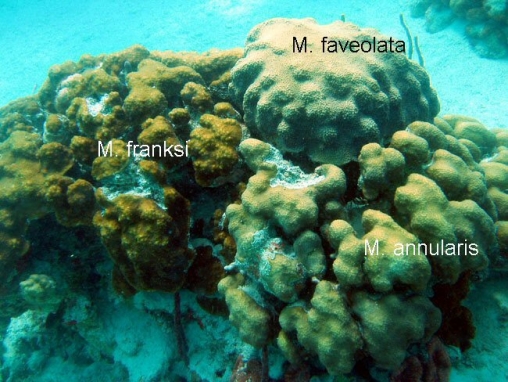
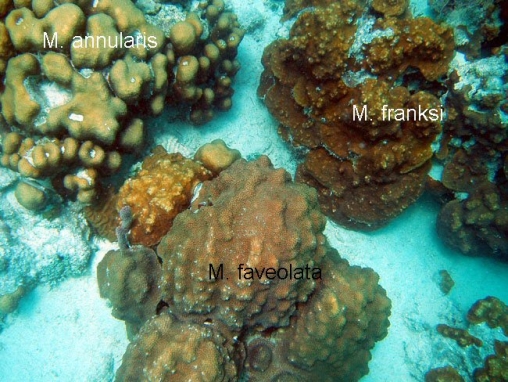
M. annularis - colonies of closely packed, separate nodules or columns, smooth but irregular surfaces. Edges are commonly not growing.
M. franksi - surfaces with scattered lumps, consisting of enlarged or protruding polyps, often pale, and irregular – the mottled colour is associated with the bumps. Gross shape is irregular bumpy mounds and plates. Growing edges contain large and small calices.
M. faveolata - massive with upward projections often arranged in rows running down the sides of colonies, but not separate nodules or columns. Corallite walls are vertical compared with volcano shaped in the other two species. Calices on growing edges are regularly spaced. Gross shape is skirted mounds.
Colonies are massive and large, and surfaces usually support small, upward mounds and projections. Calices cover entire surface. Calices are small (about 5 mm diameter) with very regular spacing. Colour is usually pale brown but may be bright, fluorescent green over the dark brown.
Distinguishing features of the 3 Montastraea species with small calices:
M. annularis - colonies of closely packed, separate nodules or columns, smooth but irregular surfaces. Edges are commonly not growing.
M. franksi - surfaces with scattered lumps, consisting of enlarged or protruding polyps, often pale, and irregular – the mottled colour is associated with the bumps. Gross shape is irregular bumpy mounds and plates. Growing edges contain large and small calices.
M. faveolata - massive with upward projections often arranged in rows running down the sides of colonies, but not separate nodules or columns. Corallite walls are vertical compared with volcano shaped in the other two species. Calices on growing edges are regularly spaced. Gross shape is skirted mounds.